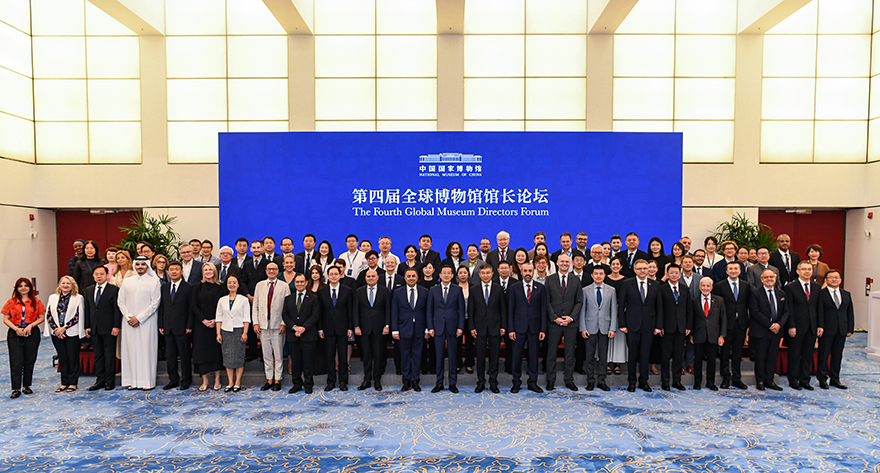
The forum, themed "Dialogue among Civilizations for a Shared Future," features three subtopics, including "Knowledge Sharing: Navigating New Paths for Museum Narratives and Cross-Cultural Exchange," "Education Empowerment: Cultivating Global Citizens and Future Dialogists," and "Collaborative Development: Exploring Global Museum Cooperation Networks and New Mechanisms." Directors and representatives from over 50 museums and cultural institutions at home and abroad—spanning more than 20 countries across five continents—delivered thematic presentations. Participating Chinese institutions included the National Museum of China, the Palace Museum, and the Dunhuang Academy, while international participants including the Virginia Museum of Fine Arts (U.S.A), the Brazilian Institute of Museums, the National Museum of Australia, National Museum of the Palaces of Versailles and Trianon (France), the National Archaeological Museum of Naples (Italy), the National Archaeological Museum of Spain, the State Historical Museum of Russia, the National Museum of the Republic of Kazakhstan, the Fine Arts Department of the Ministry of Culture of Thailand, the Asian Civilisations Museum & Peranakan Museum (Singapore), and the National Museum of Ethiopia, among others. Together, they pooled wisdom and built consensus for the sustainable development of the global cultural heritage sector.
In his address, Rao Quan noted that the Chinese government attaches high priority to museum development and has achieved remarkable progress in cultural relics conservation, academic research and interpretation, and public services. By the end of 2025, the total number of officially registered museums nationwide had reached 7,188, 91 percent of which offered free admission and received 1.56 billion visits annually. He stressed that China's cultural heritage community has earnestly implemented the Global Civilization Initiative (GCI), consistently advanced exchanges and mutual learning among civilizations, and achieved outstanding results in joint exhibitions, collaborative archaeology projects, and the establishment of long-term cooperation frameworks. Looking ahead, he expressed the expectation to foster mutual understanding through equal dialogue, deepen industry collaboration via reciprocal learning, and chart museum development pathways with innovative thinking, so as to jointly safeguard humanity's cultural heritage and leverage the strengths of cultural heritage undertakings to advance the building of a community with a shared future for mankind.
In his video speech, Shahbaz Khan stated that the theme of the Forum aligns closely with the International Museum Day themed "Museums Uniting a Divided World," and hosting the forum on the second UN International Day for Dialogue among Civilizations carries profound significance. He emphasized that museums serve as a frontline for advancing the Global Civilization Initiative and implementing the concept of dialogue among civilizations, and are important bridges connecting the present to the future. Moving forward, UNESCO will continue to actively support and foster deeper cooperation among global cultural heritage and museum bodies to facilitate a worldwide exchange and collaboration network. He also called for fully unlocking the unique cultural values embodied by museums, uniting global consensus, breaking down sectoral barriers, so that museums may always remain enduring peaceful venues where peoples of all nations gather amicably and treat one another with respect.
During the forum, the National Museum of China signed a Memorandum of Understanding with the National Museum of Australia and held multiple bilateral discussions with the Virginia Museum of Fine Arts (U.S.A), the International Alliance for the Protection of Heritage, and the European Museum Directors' Delegation to China, among others. These pragmatic steps deepened mutual learning among civilizations and drive substantive, in-depth progress in cross-civilization dialogue.
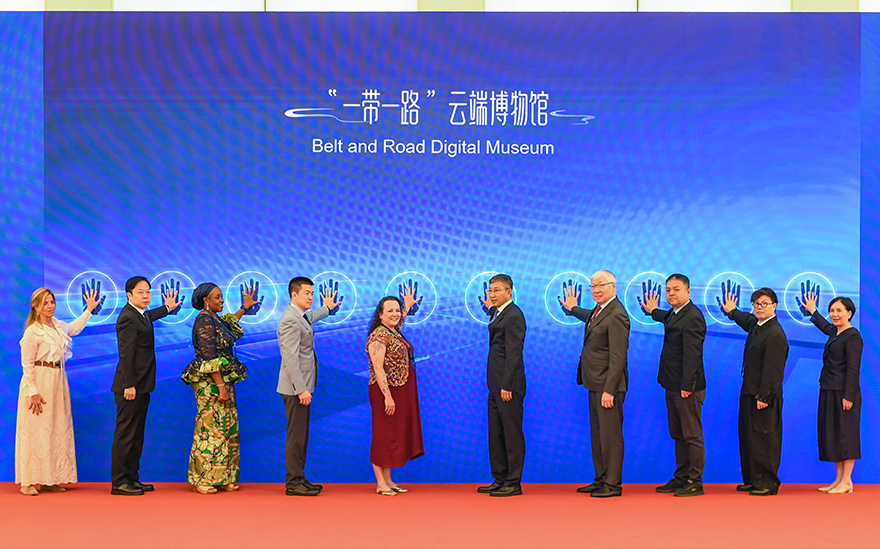
During the forum's opening ceremony, the Belt and Road Digital Museum, a brand-new digital cultural platform project, was officially launched. It is dedicated to building an open, diverse, and interactive platform for mutual learning among civilizations, integrating premium cultural heritage resources from Belt and Road partner countries and regions. By transcending the barriers of time, space, and language, it aims to promote the co-construction, sharing, and joint narration of civilizations across the Belt and Road partner countries, enabling global audiences to conveniently access and explore the splendid cultural treasures along the Belt and Road.